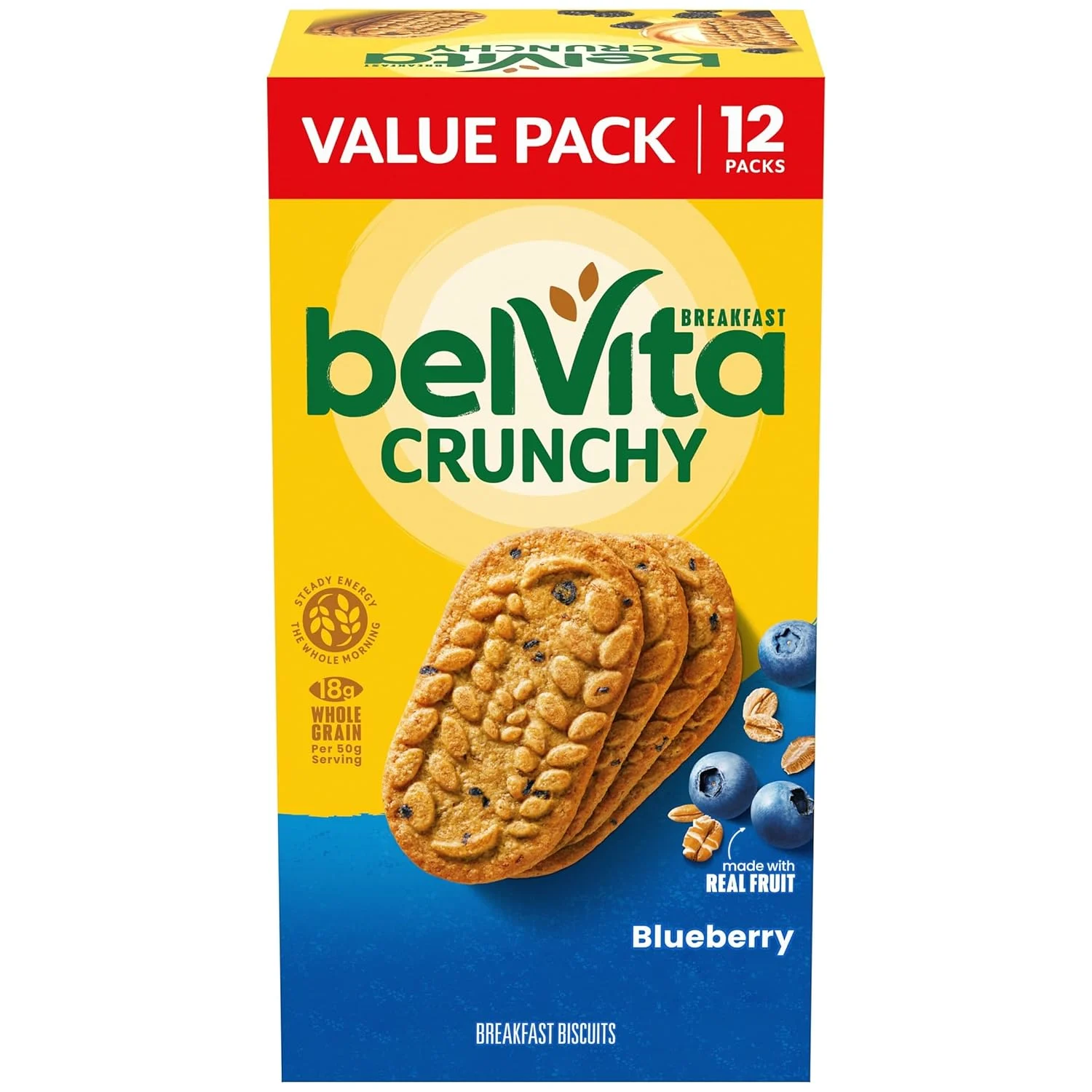
belVita CRUNCHY Blueberry

food & drinks • For 2-5 year old childrenConsumable 🍝

food & drinks

Product Images

Product Photo

belVita CRUNCHY Blueberry - Front

Tap to enlarge

Ingredient List

belVita CRUNCHY Blueberry - Ingredients

Tap to enlarge

Safe for preschoolers to eat belVita CRUNCHY Blueberry?

YES - Generally Safe
Danger Score: 3 (Lower is safer)
Quick Answer: belVita CRUNCHY Blueberry contains 23 ingredients. 1 caution. Use with Caution ⚠️ Consider preschooler activity levels.

Check for Different Age (6 available)

Ingredients Analysis (23 found)

natural flavor
⚠️4/10
Natural flavor is a non specific label. It is commonly used to make products taste better. For two to five year olds the risk is generally low but unknown components can hide allergens or irritants.
No Known Risk - Natural flavor is a broad term for flavoring substances derived from natural sources. While the exact composition can vary, current research and regulatory reviews have not identified immediate health risks for babies when used in typical amounts in consumable products. There is no strong evidence linking natural flavors to specific health risks in infants, so an abundance of caution suggests it is generally considered safe.
Confidence: HIGH
sugar
3/10
Sugar in small amounts is allowed for 2 to 5 year olds but has minor risks like tooth decay and extra calories.
Confidence: HIGH
baking soda
2/10
Baking soda is used as a leavening agent and is generally safe in small amounts in baked goods for children 2-5 years
No Known Risk - Baking soda (sodium bicarbonate) is generally recognized as safe for consumption in small amounts and is not linked to any of the listed risks when used appropriately. There is no strong evidence connecting it to irritation, hormone disruption, cancer, or other long-term health effects in babies when used as a food ingredient or in small, appropriate doses.
Confidence: HIGH
datem
2/10
DATEM is a common food emulsifier generally recognized as safe in small amounts. It is used to improve texture in nutritional drinks but should be limited for young children.
No Known Risk - Diacetyl Tartaric Acid Esters of Mono- and Diglycerides (DATEM) is widely used as a food additive and emulsifier. Current research and regulatory reviews, including those by the FDA and EFSA, have not identified immediate health concerns or specific risks for babies when consumed in typical amounts. There is no strong evidence linking DATEM to irritation, allergies, hormone disruption, cancer, or other long-term health effects in infants or children.
Confidence: HIGH
disodium pyrophosphate
2/10
Disodium pyrophosphate is a common food additive used as a leavening agent and acidity regulator. It is generally safe in small amounts for children aged 2-5 years.
No Known Risk - Disodium pyrophosphate is generally recognized as safe (GRAS) by regulatory agencies when used in food at approved levels. There is no strong evidence linking it to specific health risks in babies, and it is not associated with irritation, hormone disruption, cancer, or other listed risks at typical exposure levels.
Confidence: HIGH
salt
2/10
Salt is commonly used in small amounts in sweetened cereals for flavor. It is generally safe for 2-5 year olds but intake should be limited to avoid excess sodium.
Confidence: HIGH
blueberry juice concentrate
1/10
Blueberry juice concentrate is a natural fruit derivative commonly used in baby foods. It is safe and provides flavor and nutrients for 2-5 year olds.
No Known Risk - Blueberry juice concentrate is generally recognized as safe for babies when used in moderation as a food ingredient. There is no credible scientific evidence linking it to any of the listed health risks such as irritation, hormone disruption, cancer, or organ toxicity. Allergic reactions are rare and not specific to this ingredient. Therefore, no negative risk labels apply based on current research.
Confidence: HIGH
canola oil
1/10
Organic expeller pressed canola oil is a common safe cooking oil with low saturated fat and is generally safe for 2-5 year olds in baby foods and supplements.
No Known Risk - Canola oil is widely used in infant formulas and baby foods and is considered safe for consumption by babies. There is no strong scientific evidence linking canola oil to any of the listed risks when used as a food ingredient for infants. Regulatory agencies such as the FDA and EFSA have not identified canola oil as a risk for babies.
Confidence: HIGH
dried blueberries
1/10
Organic dried blueberries are safe for 2-5 years old and provide nutrients and antioxidants commonly used in baby snacks
No Known Risk - Dried blueberries are generally recognized as safe for babies when consumed in appropriate amounts. There is no credible evidence linking dried blueberries to any of the listed risks, such as irritation, hormone disruption, cancer, or organ toxicity. They are a natural fruit product without known harmful additives or contaminants when properly prepared.
Confidence: HIGH
ferric orthophosphate
1/10
Ferric Orthophosphate is a common iron fortificant in baby foods and cereals safe for 2-5 years old to prevent iron deficiency anemia.
No Known Risk - Ferric Orthophosphate is an FDA-approved source of iron used in infant formulas and foods. Current research and regulatory reviews do not indicate any immediate health concerns or risks for babies when used as directed.
Confidence: HIGH
niacin
1/10
Niacin is a vitamin B3 commonly added to baby foods and cereals for nutritional benefits and is safe at recommended levels for 2-5 year olds.
No Known Risk - Niacin (vitamin B3) is an essential nutrient and is generally recognized as safe for babies when used in appropriate amounts. There is no evidence of harm or negative health effects at recommended dietary levels. High doses may cause side effects in adults, but such exposures are not typical in baby products or foods.
Confidence: HIGH
niacinamide
1/10
Essential vitamin B3 form for fortification. Safe at typical food levels for 2 to 5 years. High supplement doses may cause nausea or liver effects. Included as a nutrient.
No Known Risk - Niacinamide (vitamin B3) is generally recognized as safe for consumption, including in infants, when used at recommended dietary levels. There is no strong evidence linking it to any of the listed risks in babies, and it is an essential nutrient for growth and development.
Confidence: HIGH
pyridoxine hydrochloride
1/10
Vitamin B6 pyridoxine hydrochloride is safe in regulated amounts for 2-5 years and is used to support normal growth and development
No Known Risk - Pyridoxine Hydrochloride is a form of vitamin B6 commonly used in infant formulas and supplements. It is considered safe at recommended dosages, with no evidence of harm or negative health effects in babies when used appropriately. There are no established links to irritation, hormone disruption, cancer, or other risks listed above at normal exposure levels.
Confidence: HIGH
reduced iron
1/10
Iron is essential for toddlers 2-5 years for development and commonly added to cereals for nutrition. Safe at recommended levels in baby foods.
Confidence: HIGH
rye flakes
1/10
Rye flakes are whole grain cereal flakes safe for children 2-5 years old with no significant allergen concerns beyond typical gluten sensitivity. Common in baby foods.
No Known Risk - Rye flakes are a whole grain food commonly consumed and are not associated with any known health risks for babies when prepared appropriately. There is no evidence linking rye flakes to irritation, allergies, hormone disruption, cancer, or other long-term health effects in infants. As with any grain, rare allergic reactions are possible, but rye is not a common allergen and is generally considered safe for baby consumption.
Confidence: HIGH
soy lecithin
1/10
Soy lecithin is a common emulsifier and generally safe for 2-5 year olds in small amounts in baby foods like sweetened cereals
No Known Risk - Soy lecithin is widely used in foods and infant formulas, and current research does not show immediate health concerns or significant risks for babies when consumed in typical amounts. Allergic reactions are rare, and there is no strong evidence linking it to hormone disruption, cancer, or other long-term health effects in infants.
Confidence: HIGH
wheat flour
1/10
Wheat flour is commonly used in baby foods for this age group but avoid if gluten allergy or celiac disease is present
No Known Risk - Wheat flour is widely used as a food ingredient for babies and children, and there is no strong evidence linking it to any of the listed risks for the general population. The only exception would be for babies with wheat allergy or celiac disease, but for the general population, it is considered safe based on current research.
Confidence: HIGH
malt syrup (from corn and barley)
1/10
Malt syrup from corn and barley is generally safe for 2-5 year olds as a sweetener in baby foods with no significant health risks when consumed in typical amounts.
Confidence: HIGH
folic acid
0/10
Folic Acid is very safe for 2-5 year olds and commonly added to cereals for nutritional fortification to prevent deficiencies.
No Known Risk - Folic acid is an essential B vitamin recommended for infants and pregnant women, with no evidence of harm at recommended doses. There are no established links to irritation, hormone disruption, cancer, or other risks in babies when used appropriately.
Confidence: HIGH
riboflavin
0/10
Vitamin B2 Riboflavin is an essential nutrient safe for 2-5 years and commonly added to baby foods and formulas
No Known Risk - Riboflavin (vitamin B2) is an essential nutrient with no evidence of harm or negative health effects in babies when consumed at recommended levels. It is not linked to irritation, allergies, hormone disruption, cancer, or any other risk labels listed. Therefore, it is considered safe for baby consumption based on current research.
Confidence: HIGH
rolled oats
0/10
Whole rolled oats are commonly used in baby foods for 2-5 years old. They are safe, nutritious, and provide fiber and energy with minimal allergy risk.
No Known Risk - Rolled oats are widely recognized as safe for infant consumption when prepared appropriately. There is no credible evidence linking rolled oats to any of the listed health risks for babies, and they are commonly used as a first food due to their low allergenic potential and nutritional benefits.
Confidence: HIGH
thiamin mononitrate
0/10
Thiamine Mononitrate is a stable form of vitamin B1 essential for energy metabolism and safe for 2-5 year olds in nutritional drinks.
No Known Risk - Thiamine Mononitrate is a synthetic form of vitamin B1 commonly used in food fortification and supplements. It is considered safe for infants and children at recommended dietary levels, with no evidence linking it to irritation, allergies, hormone disruption, cancer, or other health risks based on current research.
Confidence: HIGH
whole grain wheat flour
0/10
Whole grain wheat flour is a common safe ingredient in foods for children over 2 years and provides fiber and nutrients
No Known Risk - Whole grain wheat flour is widely used as a food ingredient and is generally recognized as safe for babies, except in cases of wheat allergy or celiac disease. There is no evidence linking it to the listed risks for the general population.
Confidence: HIGH

Common Questions About belVita CRUNCHY Blueberry

Preschooler-safe? belVita CRUNCHY Blueberry

Yes, belVita CRUNCHY Blueberry is generally considered safe for 2-5 year old children based on ingredient analysis.

What ingredients should I watch out for?

We analyzed 23 ingredients in belVita CRUNCHY Blueberry. 1 caution. Check the detailed analysis above for specific concerns.

Is this suitable for preschoolers to eating food & drinks?

The appropriate age depends on the specific ingredients. This analysis is for 2-5 year old children. Use the age selector above to check other ages.

⚠️ Important Disclaimers

Product Recognition: Product names are identified programatically and may be incorrect. Always verify product identity yourself.

Safety Analysis: Evaluations are for research only - consult pediatricians for medical decisions. Do not rely solely on this analysis.

No Guarantees: Results may be incomplete or inaccurate. Do not rely solely on this analysis.